Company Insight
Sponsored by Andritz
R&D in the field: Tweaking an iron ore tailings filtration technology with on‑site feedback
The challenges in tailings treatment from customers in Brazil inspired ANDRITZ to develop the “MiningMaster” filter press. Mario Gerards and Michael Panholzer tell the story about rethinking common technology and how small design changes can lead to big effects.
Main image credit:
Few areas of mining have changed as rapidly as tailings management. As “dry stacking” is gaining momentum, especially in South America, operators seek tailings dewatering methods which are promising higher water recovery and lower environmental impact. For ANDRITZ, that shift provided the starting point for the development of a filter press fittingly called “MiningMaster”. Rather than beginning with a blank sheet of paper, the design evolved from lessons learned in large-scale Brazilian iron ore tailings projects, where operators were searching for more efficient ways to support dry stacking and recover process water.
A changing tailings landscape
Following the 2019 Brumadinho dam disaster and the subsequent move away from upstream tailings dams in Brazil, mining companies accelerated the adoption of dry stacking technologies. Two early adoptors were Mineração Morro do Ipê and Itaminas, which used filter press technology as part of their transition away from wet tailings storage. At Morro do Ipê, the installation of three ANDRITZ overhead filter presses enabled the treatment of more than 13,000 tonnes of dry iron ore tailings per day while recovering approximately 9,700m³ of process water, demonstrating how filtration could become a cornerstone of modern tailings management. The operation has since become a frequently cited example of large-scale dry stacking implementation in the Brazilian iron ore sector.
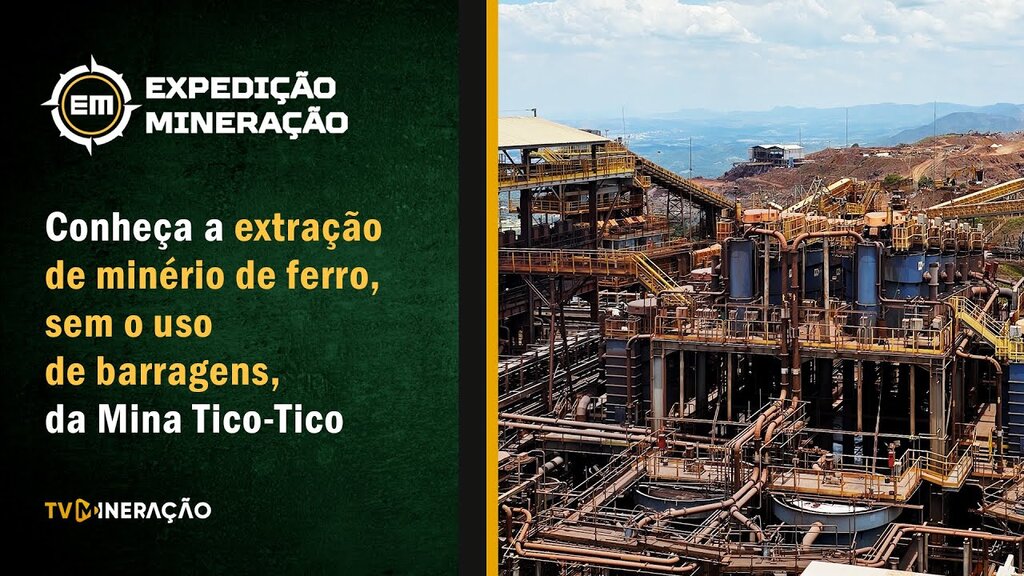
Itaminas adopted a similar approach, installing four ANDRITZ filter presses to dewater approximately 10,500 tonnes of dry tailings per day while recovering around 8,800m³ of water for reuse in the process plant. The project became a benchmark for sustainable tailings management and was later recognized by the Brazilian mining industry through receiving the Mining and Metallurgical Industry Excellence Award for its tailings disposal initiative, underscoring the growing importance of dry stacking technologies in the region.
Yet success also brought new questions.
The projects proved that filter press technology could play a major role in modern tailings management, but also revealed opportunities for improvement. Iron ore tailings are highly abrasive, resulting in wear on filter cloths and plates. Frequent maintenance and washing cycles reduce equipment availability, while every minute spent between filtration cycles directly affects throughput. These practical challenges became the foundation of a dedicated R&D program at ANDRITZ.
Looking beyond filtration performance
Traditionally, discussions about filter presses focus on dryness targets and water recovery rates. ANDRITZ engineers took a broader view, analyzing operational data, maintenance practices and operator feedback gathered, instead of asking how much water could be removed from tailings, the main question became: where is time being lost? Their findings pointed to three priorities: improve filter element handling, reduce cycle times and increase filtration capacity.
One of the key innovations is a split-beam design that allows filter cloths to be accessed and replaced outside the machine. Pilot testing showed that complete cloth replacement times could be reduced significantly, improving maintenance efficiency – with operator safety being a welcome side effect. After all, the change of filter cloths and filter plates with from the top (either on a maintenance platform on top of filter press or outside of the machine) increases safety by removing the need for entering the machine. The concept may sound straightforward, but in high-wear tailings applications, maintenance efficiency has a direct effect on productivity. Reducing downtime means more cycles completed every day and greater utilization of installed equipment.
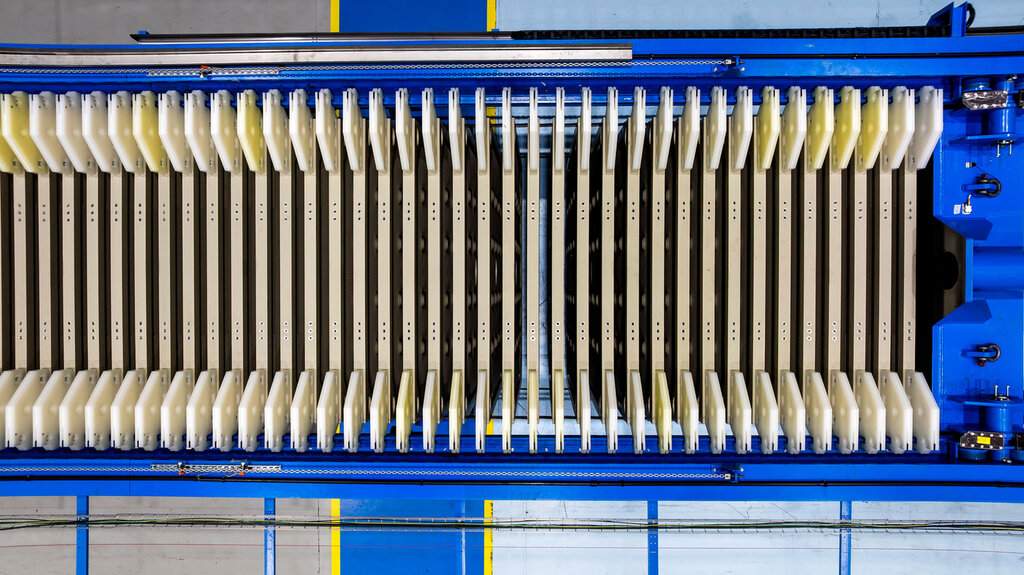
Split beam design allows change of filter elements from the top - with highest safety.
Engineers also targeted another critical performance indicator: cycle time. As one of the most important lessons learned from Brazilian operations was that throughput is influenced by much more than filtration area alone, the MiningMaster uses a linked-plate system that enables faster cake discharge, reducing one of the main sources of non-productive downtime in filter press operation. Testing demonstrated discharge times of approximately 70 seconds for a fully configured 240-plate unit, helping to increase overall throughput.
Capacity was increased as well. The MiningMaster can accommodate filter plates up to 2,500 × 2,600 mm and a maximum of 240 chambers, enabling filtration volumes of up to 60,000 liters per machine in tailings applications while maintaining high water recovery rates. The modular arrangement also allows mining companies to expand capacity as operational requirements evolve, rather than redesigning entire dewatering circuits.
The “MiningMaster” was formally introduced to the market in late 2025, with the first units already sold and being commissioned in Europe not even a year later.
Mechanical improvements are only part of the story. Like its predecessor, the ANDRITZ MiningMaster comes with addIQ, ANDRITZ's control system for process monitoring and optimization.
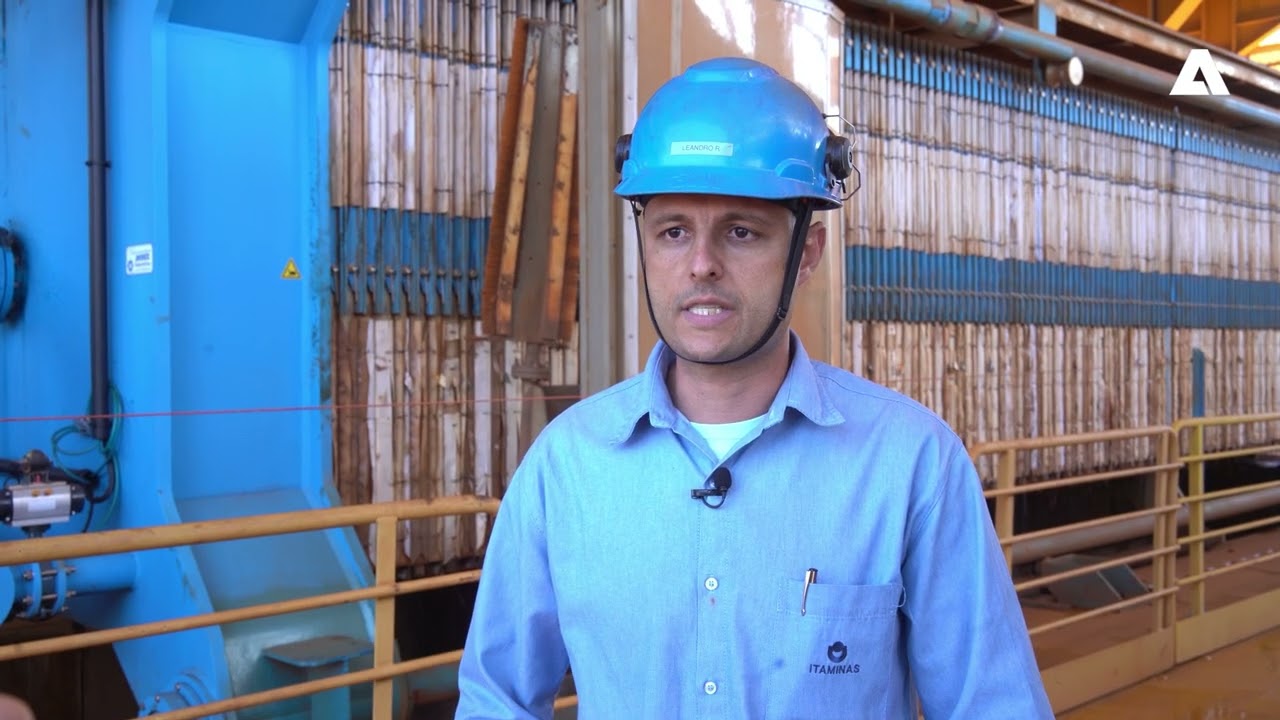
The system can monitor filtration performance, support intelligent cloth washing and help identify the optimal moments for maintenance interventions. Traditionally, washing cycles are scheduled at fixed intervals. With intelligent monitoring, the control system can identify changes in process behaviour that indicate a washing cycle may soon be required. This allows operators to optimize water consumption while maintaining filtration efficiency. By reducing unnecessary washing cycles and keeping the washing itself efficient with the use of high-pressure double cloth washing at 60 – 80 bar, equipment availability is largely improved.
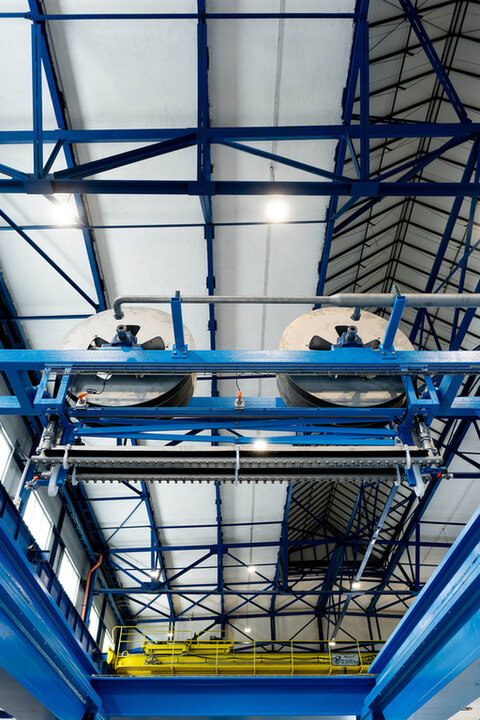
Double cloth washer.
The broader significance extends beyond a single machine. The same themes that drove the development of MiningMaster, namely safer tailings handling, water recovery and operational efficiency, are increasingly shaping investment decisions across the mining sector. These trends are evident not only in the Brazilian iron ore projects that inspired the technology but also in wider industry initiatives.
Rather than representing a single equipment upgrade, the development illustrates how operational experience can drive broader advances in process technology. For mining companies evaluating future tailings strategies, the emphasis is no longer solely on producing a dry filter cake. The focus is increasingly on achieving higher water recovery, reducing downtime and creating a safer, more efficient dewatering process. The MiningMaster has been developed with exactly these objectives in mind.

