Company Insight
Sponsored by Fowlerex Technologies
Beyond dust: the air pollution challenges behind mining processes
Mining operations can generate a complex mix of dust, fumes, vapours and gases. But what determines whether an air pollution control system will perform effectively?
Main image: Baghouse extraction system for Mansourah-Massarah Gold project.
Mining is often associated with dust. Yet across modern mining and mineral processing operations, the air pollution challenge can extend well beyond visible dust.

The challenge is that these emissions can behave very differently. Understanding the process and the characteristics of the emissions is an important first step in developing the right solution.
Frank Smith, Founder and CEO of TowHaul
From crushing and conveying through to drying, calcining, smelting and refining, different processes can generate very different emissions. Some may involve high dust loads, while others can produce fine particulate, fumes, vapours or gaseous contaminants. Temperature, moisture, particle size, chemical composition and abrasiveness can all influence how an emission behaves — and how effectively it can be captured or treated.
So what does it take to design an air pollution control system around these conditions, rather than simply selecting a standard piece of equipment?
It is a question that comes up regularly in mining and mineral processing. To explore it, Richard Pigou, Group Sales Manager at Fowlerex, brings extensive experience with industrial air pollution control systems across different processes.
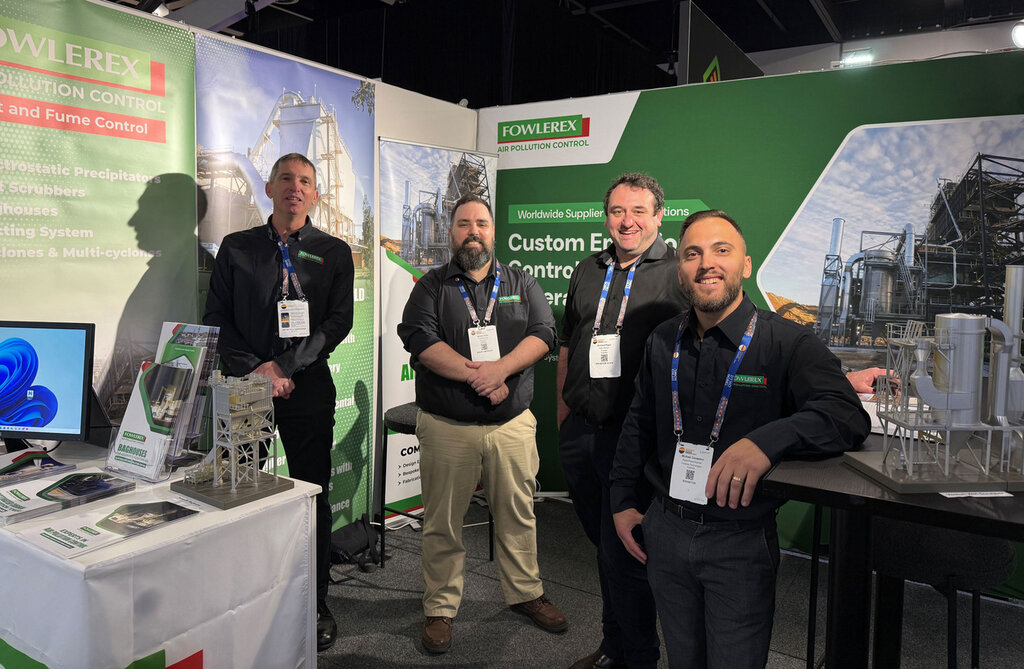
Richard Pigou, Group Sales Manager is 2nd from right with the Fowlerex team.
Moving beyond the one‑size‑fits‑all approach
The wide range of processes found across mining makes a standardised approach difficult. Even where two applications appear to generate similar particulate emissions, their operating conditions may be very different. Airflow, temperature, moisture, dust loading and particle characteristics can all influence system selection and performance.
“There is no single air pollution control technology that is suitable for every application,” says Pigou.
Depending on the process and emission characteristics, the appropriate solution may involve a baghouse, wet scrubber, WESP, cyclone or a combination of technologies. The key is not simply choosing from a list of equipment, but understanding what the process requires the system to achieve.
“The engineering needs to start with the process and emission characteristics, rather than selecting equipment first and trying to make it fit afterwards.”
When the process changes
Existing systems present another challenge. In a mining operation, equipment can continue to operate while the conditions around it gradually change. Production rates may increase, material characteristics may shift, dust loading may rise, or airflow may become unbalanced.
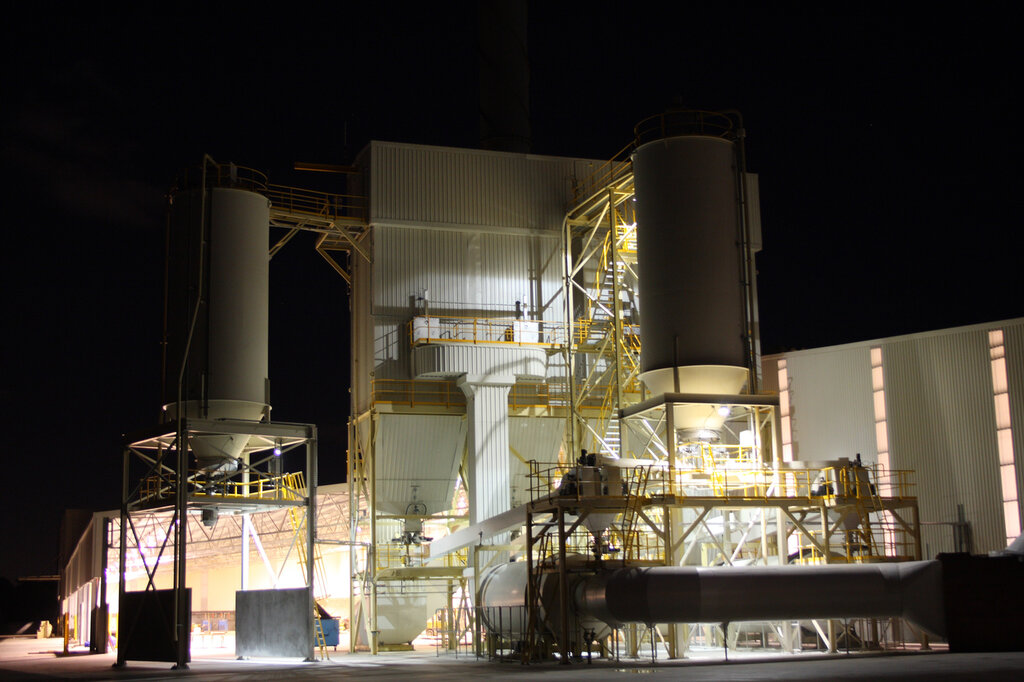
Dry Scrubber and baghouse from a Brickwork project.
As a result, a system that performed effectively when first installed may no longer be operating under its original design conditions.
“In many cases, the equipment itself has not necessarily failed. The process around it may have changed,” Pigou explains.
This is where assessing the complete system can be more useful than focusing on the collector alone. Capture points, ductwork, fans and filtration equipment all interact with the process, and a weakness in one part can affect overall performance.
For some sites, the answer may not be a complete replacement. Targeted modifications, airflow improvements or equipment upgrades may be enough to restore performance.
“Sometimes a targeted modification or upgrade can restore performance without replacing the entire system.”
Engineering for the life of the system
This process-focused approach is central to Fowlerex’s work across mining and other industrial applications. With more than 50 years of experience in air pollution control, Fowlerex works with clients on both new systems and existing installations, drawing on technologies including baghouses, wet scrubbers, electrostatic precipitation, cyclones and associated extraction and ventilation systems.
But equipment selection is only part of the equation. Long-term performance needs to be considered from the outset. Maintenance access, component selection, wear, energy consumption and future operating conditions can all influence how a system performs over time.
“Good air pollution control is not simply about installing equipment that meets an initial performance target. The system needs to work with the process and continue to perform as operating conditions evolve.”
For mining operators, this means taking a broader view of air pollution control — from the point where emissions are generated, through capture and conveyance, to treatment and discharge.
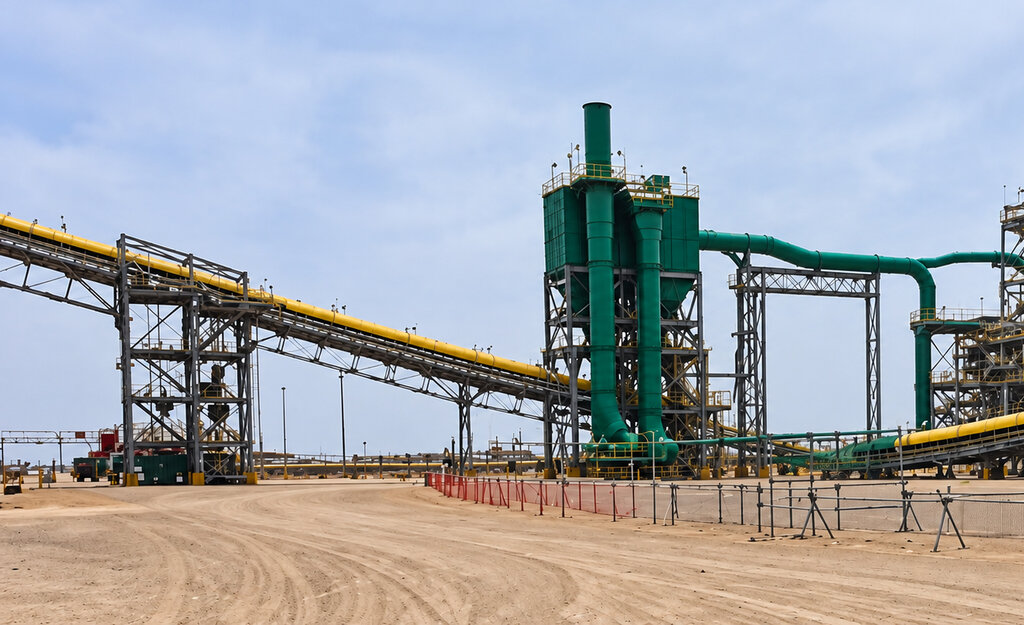
Dust extraction system for Mansourah-Massarah Gold Project.
Rather than starting with “Which piece of equipment do we need?”, the more useful question may be: “What is happening within the process, and what does the system need to achieve?”
For Fowlerex, that is where engineering experience becomes valuable — understanding the process, identifying the underlying challenge and developing a practical solution around the actual operating conditions.
It is a conversation Fowlerex has continued to have with the mining industry over many years. In 2026, Fowlerex will return to IMARC in Sydney for its fifth consecutive year, continuing to engage with mining operators, engineers and industry partners from across the sector.
“Every operation is different, and speaking directly with people in the industry helps us understand the challenges they are dealing with. IMARC is a valuable opportunity to continue those conversations.”
Fowlerex will be at Stand L42, ICC Sydney, from 27–29 October 2026.
Contact information
Fowlerex Technologies PTL Ltd.
Sydney Office:
Tel.: +61 2 8850 7611
New Zealand Office:
Tel.: +61 2 8834 3828
Email: admin@fowlerex.com.au
Web: www.fowlerex.com.au