
Comment
Supply chain shifts are reshaping Australia’s manganese sector
Australia has the manganese resources to expand supply, but ageing mines, limited processing capacity and shifting trade policies are changing the sector’s outlook. Analysis by Prasanna Aakula.
Powered by


Main video credit: eliahinsomnia / Shutterstock.com; Main image credit: Shutterstock.AI
Australia’s manganese industry entered 2026 with a combination of strengths and vulnerabilities. The country has one of the world’s largest manganese resource bases, an established mining industry and a pipeline of new projects. Yet it has also lost its only manganese alloy smelter, while global producers and governments are increasingly seeking greater control over critical mineral supply chains.
A large resource base
Australia’s manganese production is concentrated in a small number of established operations, led by GEMCO on Groote Eylandt in the Northern Territory (NT), alongside Woodie Woodie, Butcherbird and the smaller-scale Horseshoe Flats in Western Australia (WA).
The concentration is notable given Australia’s substantial manganese endowment. According to the 2026 US Geological Survey, Australia holds the largest share of the world’s manganese reserves, accounting for 32.2% of the global total as of February 2026, followed by South Africa at 30.6%. Although Australia surpassed South Africa in total reserves, its share of global production accounts for just 7.4% of estimated global production. The gap reflects Australia’s relatively small producing base, while much of its potential replacement supply remains at the development or exploration stage.
GlobalData’s January 2026 outlook forecast a 54% year-on-year increase in Australian manganese production to 4.2 million tonnes (mt), as Groote Eylandt returned to production following the devastation brought by Cyclone Megan in March 2024. That rebound is better understood as a restoration of existing capacity than as a structural expansion of Australia’s mining base. Global output is expected to increase by 3.3% to 59.1mt in 2026, with Australia contributing through the return of Groote Eylandt to full production.
The longer-term picture is more complicated. Bootu Creek, also in the Northern Territory, reached the end of its natural mine life in January 2022 after 15 years of open-cut mining.
New supply is being developed, however. The Northern Territory Government has identified Winchelsea Mining’s proposed open-cut mine on Winchelsea Island, around 600km south-east of Darwin, as being in the approvals process. The project has an 18.9mt manganese resource.
Other projects are moving through the development pipeline. GlobalData identifies Element 25’s Pilbara WA Butcherbird Expansion as a 1.1mt per annum project targeting production in 2027. Accelerate Resources is also advancing its Woodie Woodie North project, about 70km north of the operating Woodie Woodie mine, where exploration has identified manganese mineralisation. Ant Hill and Mount Thirsty are further out, while projects including Oakover and Hendeka remain at exploration or early development stages.
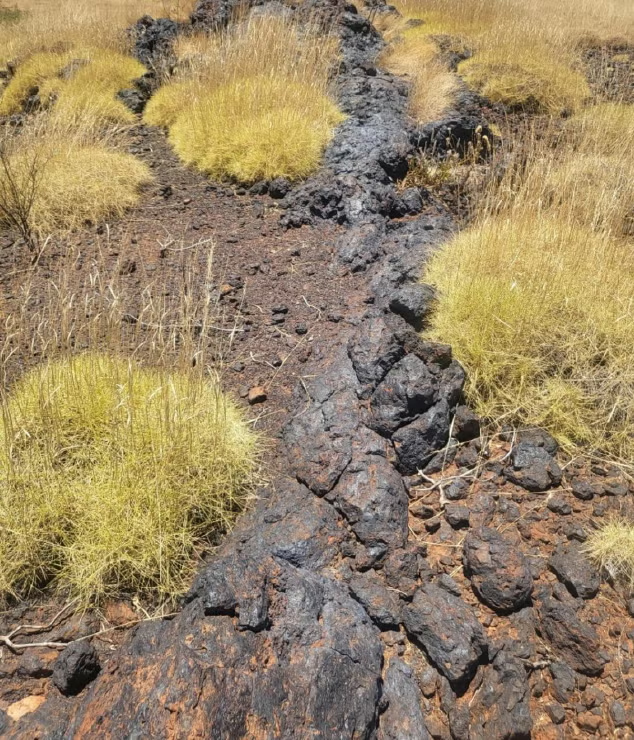
High-grade manganese vein at Accelerate Resources’ Woodie Woodie North project in Western Australia, interpreted as a potential hydrothermal root system similar to occurrences at the nearby Woodie Woodie mine. Credit: Accelerate Resources
Manganese supply chains are changing
The strategic context is changing too. Manganese remains overwhelmingly a steel-making commodity, accounting for roughly 85–90% of demand, but battery applications are adding another potential source of demand.
China remains the dominant importer of manganese ore and concentrates, accounting for 71.8% of global imports in 2024. Reuters reported in September that Chinese manganese imports had risen by more than 10% year on year (YoY) during the first eight months of 2026, alongside higher imports of several other industrial metals, as manufacturing and clean energy industries expanded.
Supply, meanwhile, is becoming increasingly shaped by policy and infrastructure decisions. Gabon, a top five manganese-producing nation, announced plans to end exports of unprocessed manganese from January 2029 as it seeks to increase domestic processing. Reuters reported that the move is part of a broader push by the country to capture more value from its mineral resources.
For Australia, this shifts the question beyond how much manganese it can mine to where that material is processed and how much value can be retained before it enters international supply chains.
Australia’s processing gap
That question has become particularly clear in Tasmania. Liberty Bell Bay, Australia’s only manganese alloy smelter, closed in 2026 after a failed sale process, leaving the country more reliant on imported manganese alloys for steel production. The closure is a setback for Australia’s ambitions to produce metals domestically, but does not prevent miners from producing manganese concentrate. It instead removes domestic capacity to convert manganese concentrate into alloy, meaning material destined for that market may need to be processed abroad.
The proposed response to the closure, reported by ABC News in August, illustrates where Australian industrial policy is heading. UK-based Natrium Redox Technologies has proposed restarting Liberty Bell Bay and introducing a lower-emissions process capable of producing high-purity manganese. The company says the technology could increase production by 20–40% and move the facility towards higher-value battery materials.
From mining resources to supply chain resilience
Government policy is increasingly looking to support this kind of supply chain resilience. In April, Australia legislated for a Critical Minerals Strategic Reserve, with £526m (A$1bn) available through the expanded Critical Minerals Facility alongside funding for selective stockpiling. The reserve is intended to address supply vulnerabilities and support Australian projects where private finance is constrained by volatile markets.
Manganese is not among the first minerals specifically prioritised for the reserve, which initially focuses on antimony, gallium and rare earths, Reuters reported. However, the policy direction is significant. Governments in Australia and other Western economies are increasingly treating critical minerals not simply as commodities to be mined and traded but as inputs into wider industrial strategies, linking resource development with processing, manufacturing and supply security.
For Australia, manganese illustrates this shift. The question is no longer simply how much ore can be mined but how industrial policy can shape what happens to that material further along the supply chain.
