Comment
Underground automation’s next era will keep people at the centre
The next phase of underground automation will depend on combining machine consistency with human judgment, writes mining engineer professor Steve Schafrik.

Main video credit: BlackBoxGuild / Shutterstock.com
The case for automating underground equipment has become stronger over the past five years. Mining companies see an opportunity to reduce worker exposure to hazardous conditions and address persistent workforce shortages, but the technology has yet to gain traction at the pace many manufacturers anticipated.

Steve Schafrik of the University of Kentucky is past chair of the Society for Mining, Metallurgy & Exploration's (SME) automation and robotics committee.
Adoption has been tempered by the substantial investment required, uncertainty about return on investment, the need for specialised technical skills and regulatory requirements that can slow deployment at active operations. Technological innovation is present in the machines available now and in those of the next generation currently under development.
Large machines operate in confined spaces near personnel and other equipment, with ground conditions continually changing. Conditions including dust, excessive noise, diesel emissions and unsupported rock add to the risk. Technologies that perform reliably on the surface or in another industry cannot always be transferred underground, particularly in coal mines where equipment must meet stringent regulatory requirements. These realities are why the industry’s near-term future is likely to be defined by a practical middle ground between manual operation and fully autonomous machinery.
Understanding the difference
The key difference lies in how much human involvement the equipment requires. Automated equipment completes a predefined task or sequence. An operator might position a roof bolter boom, for example, before the machine automatically performs the drilling and bolt installation cycle. The system improves consistency and reduces manual effort, but the operator continues to monitor the process and responds when conditions fall outside normal parameters.

Technologies that perform reliably on the surface or in another industry cannot always be transferred underground, particularly in coal mines where equipment must meet stringent regulatory requirements.
Frank Smith, Founder and CEO of TowHaul
A machine capable of operating independently must go further, sensing its surroundings, interpreting information and adjusting its actions while remaining under appropriate human oversight. A roof bolter operating at this level would need to navigate to the work area, determine where support is required, complete the installation and move to its next task while accounting for personnel, machinery and changing ground conditions. Even then, experienced operators would remain essential for monitoring performance, managing unexpected situations and intervening when conditions require human judgment.
That level of situational awareness is difficult to achieve in unpredictable underground environments. A roof fall may require a different tool or support procedure, or a dust blockage may interrupt drilling. Changes in seam height, bolt length, support patterns or ventilation plans can make a standardised process impractical. These situations are manageable for an experienced operator but far more challenging for a machine that has not been programmed to recognise them.
Moving workers away from hazardous conditions
For many operations, the greatest value of equipment innovation lies in moving workers away from hazardous conditions while preserving the judgment and flexibility they bring to the job.
Personnel proximity detection is now a mature and widely understood technology. Proximity detection should function as an emergency safeguard, much like an anti-lock braking system, rather than as the primary method for controlling equipment movement. Its effectiveness still depends on proper use, operator compliance and required devices being worn.
Personnel proximity detection is now a mature and widely understood technology.
Frank Smith, Founder and CEO of TowHaul
Machine-to-machine collision avoidance is less mature and still relies heavily on traffic planning, equipment scheduling and work-area separation. Advances in positioning technology, sensing and machine perception are moving the industry closer to systems that can identify obstacles and respond in real time, but these capabilities have not yet achieved the same level of maturity or deployment as personnel proximity detection.
Remote operation and automation have proved effective at moving workers away from routine hazards and improving working conditions, but they do not eliminate the need for experienced operators. The continuing challenge is to balance these safety improvements with the flexibility needed to respond to the unique and unpredictable conditions found underground.
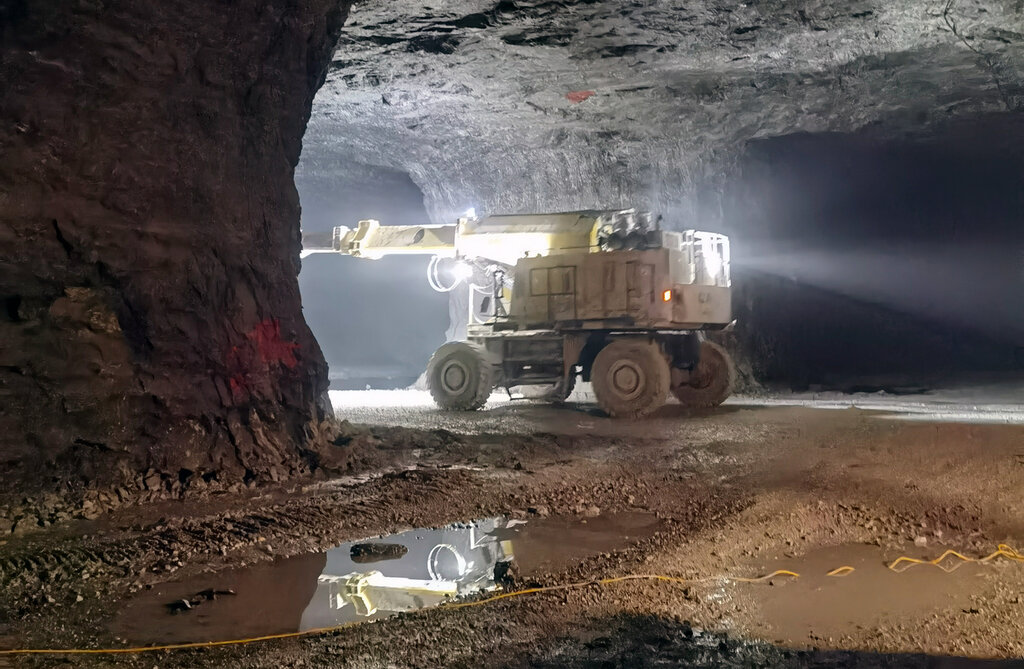
A drill jumbo operates in an underground mine, with water and rough rock surfaces reflecting its work lights. Credit: SME
Preparing people for new roles
The shift toward greater automation is also a workforce transition. Much of an operator’s value comes from the judgment developed through experience, such as knowing how to respond as conditions change, keep supporting activities aligned and recognise problems that technology may overlook. As equipment becomes more automated, that expertise will remain valuable in supervisory, technical and maintenance roles.
Much of an operator’s value comes from the judgment developed through experience, such as knowing how to respond as conditions change.
Frank Smith, Founder and CEO of TowHaul
The industry has navigated similar transitions before. The adoption of longwall mining required new skills, maintenance practices and operating cultures. Mines that succeeded invested in hands-on training, involved operators in implementation and gave the workforce time to develop confidence in the technology.
Underground automation will require the same commitment. The next generation of equipment will be more connected, capable and intelligent, but its success will not depend on technology development alone. Progress will come from pairing machines’ consistency with people’s adaptability, and using both to create safer, more productive underground operations.
